Sunday, July 26, 2020

Covid Cafe: How Do You Eat Your Corn on the Cob?


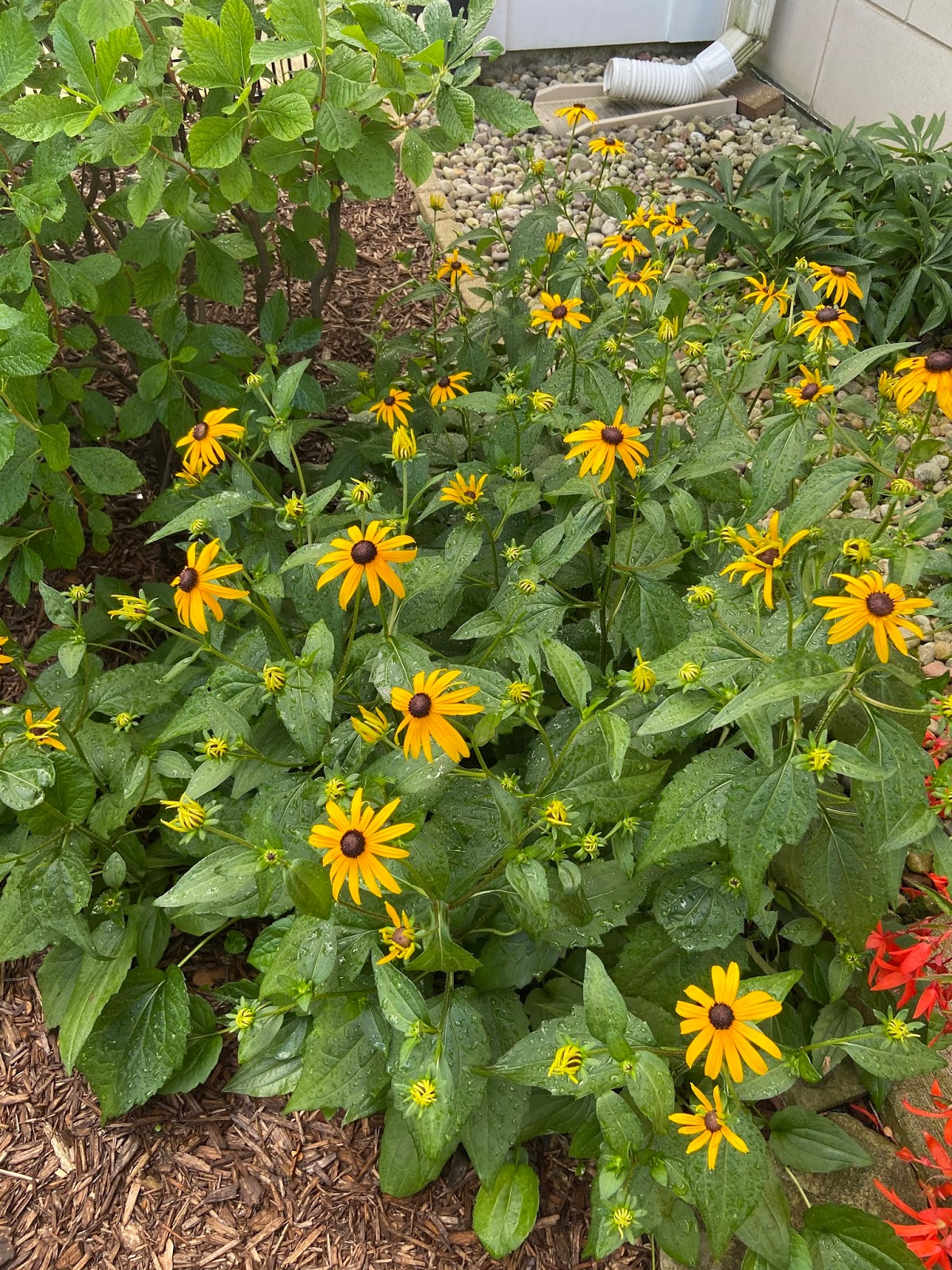
 Mexican sunflower in the Spirit Circle

Hi chefs. It's a busy day here at the cafe, but Chris and Lisa are camping again and checked in with a question I promised to put to you all. Am I wading into a family disagreement here? Leave your response in comments if possible (some people are having trouble with comments) or just let me know.

Chris writes: Here’s our camping meal tonight. Fresh corn that we bought on the way here from a farmer just outside Sandwich. Wings, potato salad, and veggies including cukes and chard stalks from the garden.  

Which brings me to a poll you need to include on the Cafe. Do you eat your corn lengthwise or around the ear? Lisa the Hoosier eats hers around the ear. I eat mine lengthwise. I find the around-the-ear method to be weird and annoying (much like many Hoosiers, but not my wife). So what’s it going to be?

Saturday, July 25, 2020

Covid Cafe: Summer Shrimp

(click here to view in browser)

Hello chefs of Covid Cafe. Are you feeding yourself well these summer days? It hardly seems like July, the days passing in some sort of Covid-time vortex that renders one indistinguishable from the next. 

Rob returns today, working the last of his sale bag of shrimp. I've been doing the same, though I need to play with the shells as he does. Let us know what you're eating!


Cold supper last night:
chicken thigh, tomatoes + basil from the garden 
and avocado

Rob writes: I broiled shrimp on a sheet pan last night.  Of course I used the shells to make a broth, strained into a bowl, added ramp butter, some thyme and lemon, and poured the whole thing over the shrimp.  Served over rice with farmer’s market fresh peas.

Mmm. I had in mind a shrimp recipe I made last year but couldn't find again online. It was essentially a stir fry with vegetables and seaweed confetti and, toward the end, shrimp.

We started with chips of zucchini from the garden.

Slivered some mushrooms and red pepper and got out the bag of dulse flakes. This fast food is an easy way to eat your sea veggies (aka seaweed). Minced some garlic and ginger.

Art riced half a cauliflower in the food processor.

Steps
--Stir fry all the veggies over high-high heat in coconut oil and remove to a plate.
--Into fresh hot oil add the cauliflower and a handful of dulse flakes, flipping it around for just a couple minutes and then dividing onto two plates.
--Raw salted-and-peppered shrimp go into the hot pan, taking just another couple minutes to cook. Add a couple shakes of fish sauce and a good dose of tamari/soy sauce.

Quote
The Dalai Lama
“Be kind whenever possible. It is always possible.” 


Morning find
 
 
Carole en San Miguel de Allende, Mexico, writes…

John’s cat likes my apartment too

Karin's bluebells
 

Black Pumas - Behind the Electric Deluxe Sessions

Friday, July 24, 2020

Covid Cafe: A Garden On Loan


A pleasant path
connects neighbors

Good day to you all. At the end of our hugelkultur story, we were considering the foolhardiness of starting more seedlings than we ultimately had room for. You'll remember I unwisely questioned the germination rate of a bunch of old seeds. Apparently I kept them dry and they stayed vibrant.


Karin and Rudy's garden
waking in spring

We had a lot of extra seedlings and nowhere to put them. Our friendly neighbors to the north had been held up in Arizona, where they overwinter, and I wondered if they would mind my growing in their sunny garden space. I wasn't even sure if they still used it.  

I asked and they said yes

Rudy tells the story of the family garden. After Karin's aunt and uncle died in 1985 we sold their mobile home, removed the concrete, and converted that space to a four-foot square garden (because it had lots of sun). I remember struggling with railroad ties to make navigation and separate flower beds easier. Then we learned that creosote in the ties was toxic and we started to replace the railroad ties with treated lumber.

The early garden consisted of flowers that Karin enjoyed, mostly perennials. Always looking for flowers that attracted butterflies and hummingbirds. We also needed chives for our scrambled eggs for Sunday morning's breakfast. We grew rhubarb, chives, parsley, dill, and the mandatory tomatoes, which our golden retrievers learned to harvest. 

Karin's lilies and our tomatoes
share space 

I enjoyed the cherry tomatoes, wiping the morning dew with your hand, and devouring a handful for a quick picker-upper before breakfast.
 
The garden was Karin's pride and joy starting about 1987. She would get bulbs and roots from friends and neighbors: Her boss brought her a 'Klunk' of Japanese Irises, from Montague came Wild Geraniums, our helper Andy dug up and planted a Butterfly Bush, Pat from Mishawaka donated a red hydrangea. 


(Ed. note: Most people with gardens can list these enduring connections between people and the clump of whatever was shared. They make growing a delight. Here, the irises in the foreground, my position for most of early June at back.)

The Rose of Sharon bushes planted themselves except for the rarer blue rose we purchased at a local garden center.

One interesting anecdote was an enterprising woodchuck, whose den was behind a woodpile about 12 feet from the garden. He dug a tunnel under the fence and flower beds to bring him right into the middle of the garden. He proceeded to enjoy all the vegetables and some flowers before we could trap him and dispatch him to woodchuck heaven.  

(Ed. note: the hole is still there and here's my photo of it from early June.)
 

As we retired and traveled more the garden received primarily perennials and weeding it became a chore for the senior citizens.


It has been a joy to
plant among Karin's flowers


Happily, Rudy and Karin returned home just in time for the harvest (you'd be crazy to think I didn't tease them about this). Rudy and I strolled the garden this morning, picking a few of his favorite cukes. Lifting a squash vine out of a particularly healthy patch of mint, we stumbled on this.

A monster Row 7
The growing instructions recommend harvesting at banana diameter. I think we missed that boat.

Looking back, in early spring it was easy to see how and where we could plug in veggie starts. We were thrilled they'd have a good home.

The garden stayed semi-orderly in the beginning.


I planted in and amongst clumps of perennials, digging homes for tomatoes, peppers, herbs, and squash between lemon balm, mint, irises, and wild geranium.


Clematis at the garden gate


Happy in all that sun, everything thrived.

Now the massive growth threatens to overtake the pathways.

It's definitely a Pippi Longstocking garden today, calling for a happy daily visit to trim, cajole, harvest, and just generally appreciate the food jungle.

On the cusp of the tomato ripening, we welcome the return of our generous neighbors.


Thursday, July 23, 2020

Covid Cafe: Summer Floral


Good day to you, chefs. I know I promised a look at our generous neighbor's loaner garden today, but we've got to keep it short due to a hardware store run (those trellises don't grow on trees). However, Kay sent us a glimpse of her blooming Chicago townhouse, so feast your eyes and we'll see you tomorrow.

Kay writes: Everything is blooming here... late because of the shade from my northern exposure. I am so fortunate to have all this outdoor space.


Wednesday, July 22, 2020

Covid Cafe: How We're Growing Food Now


Many of you have asked for more on how we're growing food here. We formerly grew on the roof of our place in Chicago with a like-minded group we called Green Roof Growers (more here). 

Advantages: absolutely full sun. Downsides, everything had to be hauled to the roof + no planting bed up there so we used a sub-irrigated buckets filled with a fertilized mix that wicked water. The results were pretty impressive. You can read more by looking around our previous site here.

Melons growing
on our Chicago roof

After selling the building we found this current property in SW Michigan. It sits on the St Joseph River and is densely treed. But it wasn't long before my decades-long compulsion to grow food reappeared. Now I could get my hands into some real soil. I searched for sun.

Original hugelkultur beds
In May 2018 we created our first hugelkultur (more below) bed, along the driveway where the sun got through a big hole in the trees. 

My goal was to build it mostly from materials I could find on the property. The bed started with a large piece of cardboard laid over grass and for the edging some logs swiped from Art's log pile, where he was splitting firewood.

We assembled that greenhouse together from a kit. At the end I decided the box should be labeled "Relationship Test."

Hugelkultur
Hugelkultur (roughly translated from the German as "hill culture") is nothing more than making raised garden beds filled with rotten wood. This makes for raised garden beds loaded with organic material, nutrients, air pockets for the roots of what you plant, etc. 

As the years pass, the deep soil of your raised garden bed becomes incredibly rich and loaded with soil life. As the wood shrinks, it makes more tiny air pockets - so your hugelkultur becomes sort of self tilling. The first few years, the composting process will slightly warm your soil giving you a slightly longer growing season. 

The woody matter helps to keep nutrient excess from passing into the ground water-- and then re-feeding that to your garden plants later. Plus, by holding so much water, hugelkultur cuts down on watering.

I started small but soon added
huge logs to the bottom of this bed

We topped the buried wood with cow manure, mushroom compost, and some organic soil so I could plant ASAP.

It didn't take long that first year for the plants to thrive.

So of course I built a second bed
near the first in the same sun


  2019 Spirit Circle hugelkultur bed
In the carefree, pre-pandemic days of October 2019 (just last year, though it seems like a lifetime ago) we started building the larger Spirit Circle hugelkultur bed down toward the river where there was more sun. 

Since I'd made the other growing areas with on-site materials I decided to use the same technique and spent the mostly-mild winter hauling rotting wood and filling the circle with enormous dead logs and any plant detritus (leaves, sticks, brush) I could find. 

Upside: No gym membership required for this full-body workout.

My supply of edging logs was looking bleak, though. Plus I wanted this bed to be higher/deeper.

We used what we could find for edging and by March 2020 (when there was no way we were going out during the plague to get soil amendments like manure and mushroom compost), I discovered South Bend has an extraordinary compost program. They take tree and garden waste and grind it, pile it in rows so it heats to kill any weed seeds, and then put it through a screen.

Remarkably, it's free to take as long as you load your own truck. Or in this case (since my body was strong but wrecked from building this bed) our friendly helpers got it for us and put it on top of the now leaf-laden Spirit Circle.
 

Art brought more "finish" logs he found on the side of the road so I could make the edges higher.


By April, 2020, the cool-weather arugula I'd planted was happily coming up. I used some cardboard box leftovers as a path until I could figure out how I would gain access to this planting area.


Meantime, I'd started seeds--lot of seeds--that were maturing under a rigged-up grow light system Art helped me set up from Home Depot online. They delivered.

Back in the original beds,
the spring greens were coming on strong
 

Happy tomatoes


Soon it was time to move all the plantlings out into the sun. I had started all the veggie seeds I had left over from 2009 and (surprise) they all germinated just fine. This is a lot of tomato plants. 

Meantime, I met Les, a nice neighbor who uses his saw to create wood sculpture. He works for the electric company taking down overgrown trees and removing ancient cedar poles that are unsteady. He agreed to slice up a cedar pole for me to create stepping disks so I could make my way into the garden.

He delivered a beautiful set
(note: these smell like heaven)


I was beyond happy 
to be done with the build


The steps allowed access into the interior
so I could start planting


Everything grew like crazy in this bio-diverse soil, rotting wood contributing all kinds of good things to the plants up top. Plus many nooks and crannies underground provide what I can only imagine is a funhouse for the moles. I forked on leaf mold by the wheelbarrow-full to preserve moisture.

NB: If you want a cleaner look, you can start with a wood or metal surround and fill it using the same hugelkultur technique. 

July 2020
You've seen many photos of the glorious vegetables thriving in the diverse hugelkultur environment. I am a convert, period. Here are a few more pictures from this morning.

Winter squash in the original bed

These are the two original beds and a plant table Art picked up for cheap at Lowe's. Plus a beautiful grate Wayne wanted to get rid of that makes an ideal climbing structure for the squash. The tower at left I found in a pile of junk on a nearby property.

Cherry tomatoes
in the original beds

Plant friends
in the Spirit Circle

Remember the hardware store trellis shortage? I'm using them to extend the outer edges for cukes and squash to grow on.

It's a joy to visit this 
riot of growth every day

And we are eating
so well

But wait. Not all those plant starts fit into the hugelkultur beds. Tomorrow: how our friendly neighbors loaned me their garden so I could keep planting.